

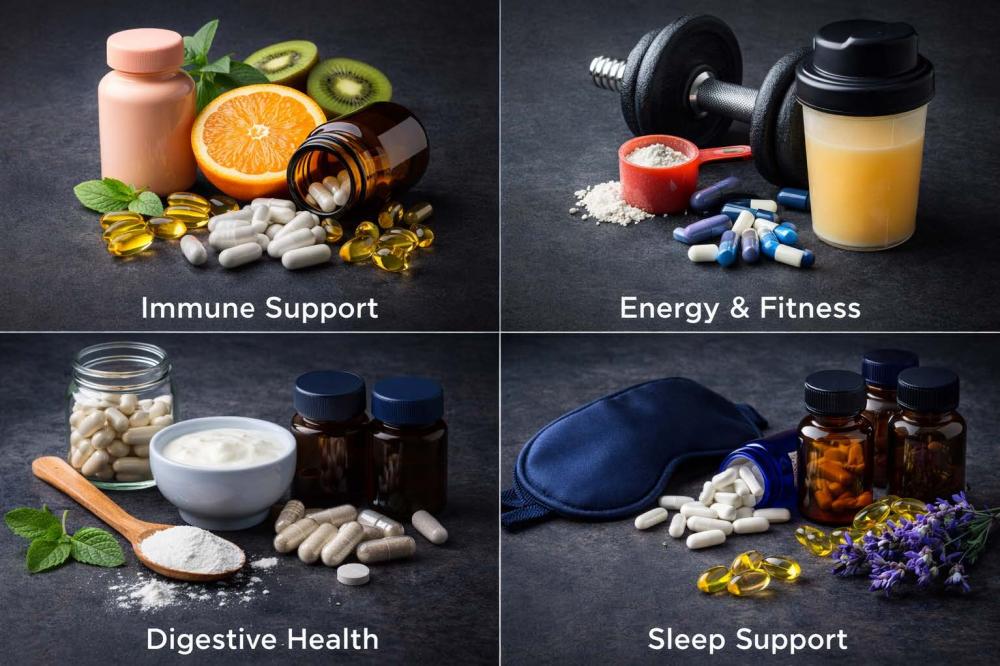
Dietary supplements have become part of a healthy lifestyle for many people in Saudi Arabia, whether to support immunity, improve energy, compensate for vitamin and mineral deficiencies, or support overall health. With so many options available, many people wonder: what exactly are dietary supplements? Are they necessary for everyone? And how do you choose a safe and suitable supplement?
In this comprehensive guide, you will learn about the concept of dietary supplements, their types, benefits, risks of improper use, and the most important tips for choosing the right supplement for your body and needs.
What are dietary supplements?
Dietary supplements are products that contain nutritional ingredients such as vitamins, minerals, herbs, amino acids, or other substances. They are used to support the diet, not replace it. Supplements usually come in forms such as capsules, tablets, powders, liquids, or gummies.
Simply put:
A dietary supplement helps fill a gap or support a specific need, but it is not a substitute for a balanced diet.
Why do people use dietary supplements?
There are many reasons why people use supplements, including:
- Compensating for vitamin or mineral deficiencies
- Supporting immunity during seasonal changes
- Boosting energy and focus during stress or busy lifestyles
- Supporting digestive and gut health
- Improving sleep and relaxation
- Supporting hair, skin, and nail health
- Supporting fitness, performance, and recovery
Important: Smart supplement use starts with identifying your actual need, not random selection.
Are dietary supplements necessary for everyone?
Not necessarily. Some individuals meet all their nutritional needs through a balanced diet and healthy lifestyle.
However, supplements may be helpful in cases such as:
- Confirmed deficiencies through lab tests
- Unbalanced diet
- Poor appetite or limited food variety
- Fast-paced lifestyle with irregular sleep
- Periods of stress or fatigue
- Certain medical conditions as advised by a doctor
Common types of dietary supplements
- Vitamins and minerals
- Examples include:
- Vitamin D
- Vitamin C
- Zinc
- Iron
- Magnesium
These are commonly used to correct deficiencies or support daily needs.
- Immune support supplements
- May include:
- Zinc
- Vitamin C
- Vitamin D
- Selenium
- Digestive health supplements
- Probiotics
- Fiber supplements
- Digestive enzymes
Used to support digestion and improve bowel habits.
- Sleep and relaxation supplements
- Melatonin (in appropriate doses)
- Magnesium
- Calming herbal blends
- Energy and sports supplements
- Electrolytes
- Amino acids
- Energy-supporting vitamins
Difference between supplements and medications
This is very important:
- Supplements: Support health and fill nutritional gaps, not intended to treat diseases
- Medications: Used to treat or manage diseases under medical supervision
Supplements should never replace medical treatment when needed.
How to choose the right supplement in Saudi Arabia?
Choosing the right supplement depends on clear criteria:
- Define your goal
- Ask yourself:
- Do I need immune support?
- Do I have a deficiency?
- Do I have digestive issues?
- Do I need sleep support?
Each goal requires a different type of supplement.
- Read the label carefully
Check:
- Active ingredient amount per serving
- Number of servings
- Usage instructions
- Warnings and interactions
- Avoid random combinations
A common mistake is taking multiple products with the same ingredient (such as zinc or vitamin D), which may lead to excessive intake.
- Choose a trusted source
Quality includes:
- Product origin
- Storage conditions
- Transparency
- Customer support
Do dietary supplements have side effects?
Yes, side effects may occur, especially when:
- Using high doses
- Combining multiple supplements with the same ingredient
- Having sensitivities or stomach irritation
- Interactions with medications
Possible side effects include:
- Nausea or stomach discomfort
- Headaches in some cases
- Sleep disturbances if taken at the wrong time
- Interference with mineral absorption
Always follow usage instructions and avoid excessive intake.
When should you consult a doctor?
Consult a healthcare professional if:
- You are pregnant or breastfeeding
- You have chronic diseases
- You take regular medications
- You have unexplained symptoms
- You plan to use multiple supplements together
Best supplements by goal (quick guide)
Immune support
- Vitamin D
- Zinc
- Vitamin C
Digestive support
- Fiber
- Probiotics
- Digestive enzymes
Sleep support
- Magnesium
- Melatonin (carefully and in appropriate doses)
Energy support
- Electrolytes
- Selected vitamins and minerals based on need
This is a general guide; the best choice depends on your individual condition.
Best dietary supplements at Yaswell
If you are looking for trusted supplements in Saudi Arabia, you can explore categories such as:
- Immune support
- Digestive health
- Sleep and relaxation
- Men’s health and fertility
Frequently Asked Questions (FAQ)
- Are dietary supplements safe?
- Generally yes when used properly, but misuse or high doses may cause side effects.
- Do supplements treat diseases?
- No. They support health and do not replace medical treatment.
- When is the best time to take supplements?
- It depends on the supplement. Some are best taken after meals to reduce nausea.
- Can I take multiple supplements in one day?
- Yes, but avoid duplicating the same ingredient.
- Do supplements cause weight gain?
- Most do not directly cause weight gain, but some may affect appetite or energy.
- Are supplements suitable for men and women?
- Yes, but needs vary by age, health, and lifestyle.
- Are supplements useful for students?
- They may support focus and energy if there is deficiency or stress.
- Are supplements suitable for athletes?
- They may support recovery and performance depending on needs.
- Can supplements be taken on an empty stomach?
- Some may cause nausea, so it is often better to take them with food.
- Is there a difference between US and European supplements?
- Quality varies by brand, but choosing a trusted source is most important.
- Do supplements require a prescription?
- Many do not, but some conditions require medical advice.
- Do supplements interact with medications?
- Yes, some supplements may interact with medications.
- How do I know if I need a supplement?
- Through lab tests, professional evaluation, or clear deficiency symptoms.
- Can supplements replace food?
- No, they complement a healthy diet.
- How to choose the best supplement?
- Define your goal, read the label, choose a trusted source, and follow proper dosage.
Important Notice
This content is for educational purposes only and is not medical advice. If you have chronic conditions or persistent symptoms, consult a specialist before using supplements.
References
- NIH – Office of Dietary Supplements
- https://ods.od.nih.gov/factsheets/WYNTK-Consumer/
- FDA – Dietary Supplements
- https://www.fda.gov/consumers/consumer-updates/fda-101-dietary-supplements
- Mayo Clinic – Dietary Supplements
- https://www.mayoclinic.org/healthy-lifestyle/consumer-health/in-depth/dietary-supplements/art-20044894