

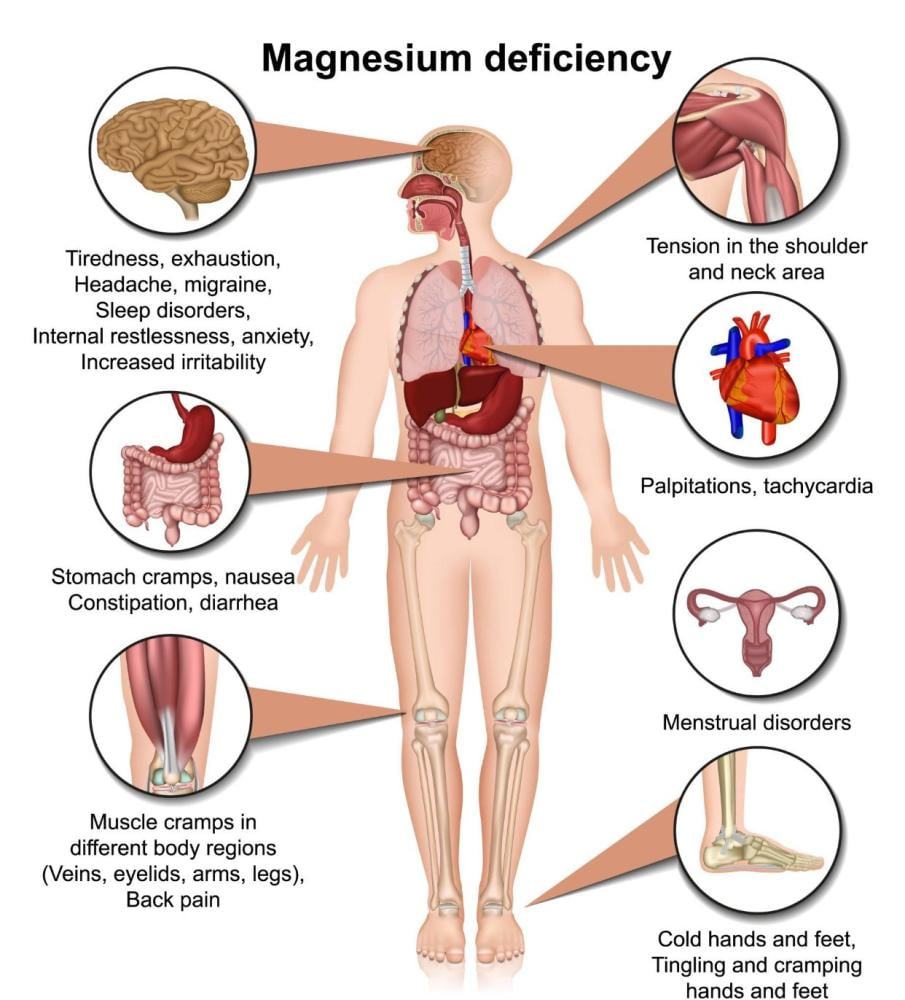
9 Signs That May Indicate Magnesium Deficiency in the Body
Magnesium is an essential mineral that the body needs to perform hundreds of vital functions. Studies indicate that it is involved in more than 300 enzymatic reactions in the body and plays a key role in the health of the nerves, muscles, heart, energy levels, and sleep.
Despite its importance, some people may experience low magnesium levels due to poor nutrition, stress, or certain health conditions.
In this article, we highlight the most common signs that may indicate magnesium deficiency and how to support your body in getting enough of it.
What is Magnesium and Why Does the Body Need It?
Magnesium is a vital mineral involved in many bodily functions, such as:
• Supporting the nervous system
• Regulating heart rhythm
• Helping muscles relax
• Producing energy within cells
• Regulating blood pressure
• Contributing to bone health
It also plays an important role in regulating nerve and muscle signals and affects sleep quality and nervous system balance.
- Muscle Cramps or Frequent Tightness
One of the most common signs of magnesium deficiency is muscle cramps, especially in:
• Legs
• Feet
• Back
This happens because magnesium helps muscles relax, and when levels are low, muscles may become more prone to contractions.
- Eye Twitching or Small Muscle Spasms
Eye twitching is a common symptom that may be linked to deficiencies in minerals like magnesium.
However, it may also occur بسبب:
• Stress
• Lack of sleep
• Excess caffeine
- Feeling Anxious or Stressed
Magnesium plays a role in regulating the nervous system.
Some studies suggest that low magnesium levels may be associated with increased:
• Stress
• Anxiety
• Nervous sensitivity
Therefore, magnesium is considered important for supporting emotional and nervous balance.
- Difficulty Sleeping or Insomnia
Magnesium helps regulate certain neurotransmitters related to sleep, such as GABA.
When magnesium levels drop, some people may experience:
• Difficulty falling asleep
• Frequent waking during the night
• Light or poor-quality sleep
- Ongoing Fatigue and Exhaustion
Unexplained fatigue may sometimes be linked to magnesium deficiency, as this mineral plays a role in energy production within cells.
Low levels may lead to:
• General weakness
• Low energy
• Difficulty concentrating
- Heart Palpitations
Magnesium is important for regulating electrical signals in the heart.
In some cases, low levels may lead to:
• Heart palpitations
• Irregular heartbeat
In such cases, it is always recommended to consult a doctor for proper evaluation.
- Frequent Headaches
Some research suggests that low magnesium levels may be associated with an increased risk of:
• Headaches
• Migraines
Some studies have shown that supporting the body with magnesium may help individuals who experience frequent headaches.
- Poor Concentration or Mental Fatigue
Magnesium is important for brain function, and low levels may affect:
• Focus
• Mental performance
• Nervous system balance
- Nighttime Muscle Cramps or Tension
Some people experience leg cramps during sleep, and deficiencies in minerals such as magnesium may be a contributing factor.
Best Dietary Sources of Magnesium
You can support your body with magnesium by consuming natural foods rich in it, such as:
• Leafy greens (spinach and kale)
• Nuts like almonds and cashews
• Seeds such as pumpkin seeds
• Whole grains
• Avocado
• Legumes
Maintaining a balanced diet helps provide the body with essential minerals.
When Should You Consult a Doctor?
Although magnesium deficiency may cause the symptoms mentioned above, these symptoms can also be linked to other conditions.
You should consult a doctor if:
• Symptoms persist
• You experience heart palpitations
• You have frequent muscle cramps
• You feel severe unexplained fatigue
Medical evaluation and blood tests can help determine the exact cause.
Conclusion
Magnesium is an essential mineral involved in many vital processes in the body, and low levels may lead to symptoms such as muscle cramps, fatigue, and sleep disturbances.
Maintaining a balanced diet may help support magnesium levels and improve overall health.
Understanding your body’s signals and responding to them early can help maintain a healthy balance.