

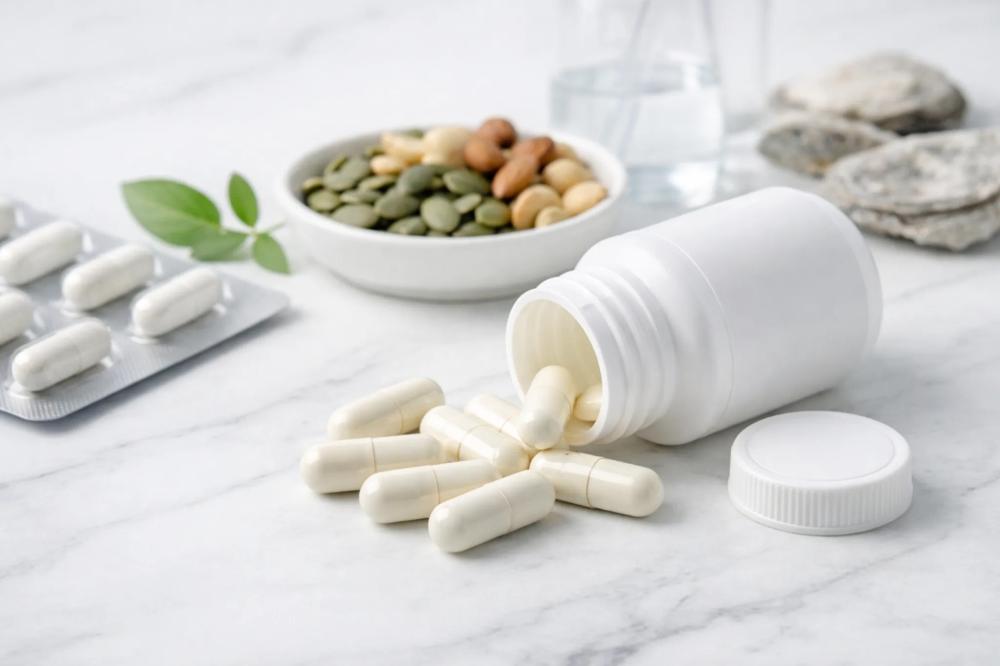
Zinc is an essential mineral that supports immune system function and contributes to wound healing. Research suggests that proper use of zinc may help reduce the duration of some cold symptoms in certain individuals. However, zinc is not a treatment for diseases and does not replace medical consultation when needed.
How Does Zinc Support the Immune System?
Zinc plays an important role in immune cell function and regulating the inflammatory response. Its key functions include:
• Stimulating the production of white blood cells
• Supporting antibody production
• Regulating inflammatory responses
• Supporting the function of immune cells in the body
Zinc deficiency may weaken immune response and increase susceptibility to infections.
What Are the Best Types of Zinc Supplements?
Zinc supplements تختلف من حيث الامتصاص والتحمل، ومن أشهر الأنواع:
• Zinc Picolinate: Known for good absorption
• Zinc Citrate: A suitable option and may be gentle on the stomach
• Zinc Gluconate: Commonly used, especially in cold-related products
• Zinc Oxide: Generally less absorbable compared to other forms
Important Tip: Choose a zinc supplement with an appropriate dosage and preferably take it after meals to reduce nausea.
Does Zinc Help the Body Fight Infections?
Zinc supports the body’s natural immune functions, and deficiency may increase the risk of infections. Some studies have examined zinc’s role in respiratory infections, but results vary depending on dosage, usage, and health condition. It is best considered part of a healthy lifestyle rather than a standalone treatment.
For scientific evidence, refer to a study published in BMJ Open (2021).
What Is the Recommended Daily Dose of Zinc?
The appropriate dosage varies based on age, health status, and nutritional needs. It is best to follow the recommended dosage on the product and avoid high doses for extended periods without professional guidance.
If you are taking multiple supplements, ensure that zinc is not duplicated across products to avoid exceeding the daily intake unintentionally.
When Should Zinc Be Taken? Before or After Meals?
To improve tolerance and reduce nausea, follow these guidelines:
• Take zinc after meals to reduce nausea
• Separate it from iron or calcium by about two hours for better absorption
• If it causes stomach discomfort, take it with a main meal instead of on an empty stomach
Are There Symptoms of Zinc Deficiency in Adults?
Zinc deficiency symptoms may appear gradually. Common signs include:
• Weak immunity and frequent infections
• Slow wound healing
• Loss of appetite or taste
• Hair loss
• Poor memory or concentration
If these symptoms persist, consult a specialist for proper evaluation.
Are There Any Precautions When Using Zinc Supplements?
Yes, there are important precautions:
• Avoid high doses for long periods without professional supervision
• Zinc may interfere with copper absorption, so balance may be needed with long-term use
• Avoid taking it with iron at the same time
• It may cause nausea if taken on an empty stomach
• Consult a doctor if pregnant, breastfeeding, or taking medications or having chronic conditions
Best Immune Support Supplements at Yaswell
If you are looking for reliable supplements to support immunity, you can explore Yaswell’s immune support products and choose what suits your needs.
Important Notice
This content is for educational purposes only and is not medical advice or a substitute for professional diagnosis. If symptoms persist or you have chronic conditions, consult a specialist before using supplements.
Frequently Asked Questions About Zinc and Immunity in Saudi Arabia (FAQ)
- Does zinc really boost immunity?
- Zinc supports the body’s natural immune functions and helps immune cells perform more effectively, especially in cases of deficiency.
- What is the best time to take zinc in Saudi Arabia?
- The best time is usually after a main meal to reduce nausea, with adequate water intake, especially in hot climates.
- Is zinc suitable for daily use?
- It may be suitable for daily use at recommended doses, but high doses should not be used long-term without professional advice.
- What is the recommended daily dose of zinc for adults?
- Dosage varies depending on age, health condition, and nutritional needs. It is best to follow product guidelines and avoid combining multiple zinc supplements.
- Can zinc help reduce the duration of colds?
- Some studies suggest zinc may help shorten cold symptoms in certain individuals when used appropriately, though results vary.
- Is zinc useful during winter in Saudi Arabia?
- Zinc may be a helpful option for immune support during winter, especially with seasonal changes and increased colds, as part of a balanced lifestyle.
- Does zinc help with fatigue?
- Zinc may support overall body function if there is a deficiency, but fatigue has multiple causes such as sleep, nutrition, and deficiencies in iron or vitamin D.
- What is the difference between zinc types like Picolinate and Gluconate?
- The difference is mainly in absorption and stomach tolerance. Zinc Picolinate is known for good absorption, while Zinc Gluconate is commonly used in cold-related products.
- Can zinc cause nausea or stomach pain?
- Yes, zinc may cause nausea if taken on an empty stomach. It is recommended to take it after meals.
- Can zinc be taken with iron or calcium?
- It is recommended to separate zinc from iron or calcium by about two hours to avoid absorption interference.
- Does zinc affect copper levels?
- Long-term high-dose use may affect copper balance in some cases, so appropriate dosing is important.
- What are the symptoms of zinc deficiency in adults?
- Possible symptoms include weak immunity, frequent infections, slow wound healing, loss of taste or appetite, hair loss, and poor concentration.
- Is zinc suitable for men?
- Yes, zinc is important for men as part of general nutrition and supports several vital functions in the body.
- Is zinc suitable for women?
- Yes, zinc is also important for women and may be beneficial, especially in cases of deficiency, while staying within recommended doses.
- How do I choose a suitable zinc supplement in Saudi Arabia?
- Choose a supplement from a trusted source and ensure:
• The zinc type is appropriate (Picolinate, Citrate, or Gluconate)
• The dosage is clear and suitable for daily use
• Usage instructions are clearly stated
• Avoid combining multiple zinc-containing products unnecessarily
Reference:
https://www.health.harvard.edu/nutrition/zinc-what-it-does-for-the-body-and-the-best-food-sources